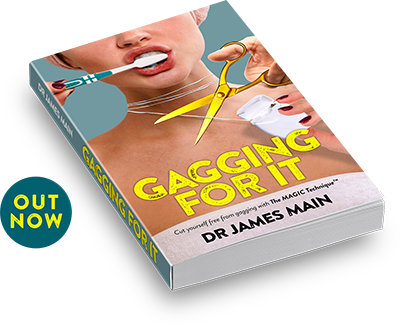
Gagging For It is a practical and accessible guide that addresses one of the most common and challenging problems encountered in dental practice: the management of the gag reflex. It is aimed primarily at dental practitioners who regularly treat anxious or gag-prone patients. Its stated purpose is to provide simple, effective, and immediately applicable techniques to reduce gagging during dental procedures, improving patient comfort and clinical efficiency.
The book is organised into clear, structured sections that move from explanation to practical application. Early chapters outline the physiological and psychological basis of the gag reflex, with Chapter 1 highlighting mind-emotion links and framing hypersensitive gagging as a learned psychosomatic response. This perspective helps explain why reassurance alone is often ineffective, while the concise, non-technical style makes the content accessible to readers with varying levels of clinical experience.
Subsequent chapters introduce a range of non-pharmacological techniques for gag control, including behavioural strategies, distraction methods, positioning adjustments, and simple chairside interventions suitable for routine dental appointments. Central to this approach is the author’s Magic Technique, presented as a straightforward method based on controlled breathing and patient communication to interrupt the gag reflex without the need for sedation or invasive measures. A distinctive feature of the book is its emphasis on communication, rapport, and patient psychology, highlighting how clinician confidence and presentation can influence patient responses. Clear explanations, illustrative examples, and step-by-step guidance enhance the book’s practical value.
The final chapters consolidate these techniques into a coherent clinical approach, encouraging practitioners to adapt methods to individual patients rather than relying on a single solution. While pharmacological management is not explored in depth, this appears to be a deliberate choice, reinforcing the book’s focus on simple, low-risk, and universally applicable methods.
This book provides a focused and useful resource for managing a common clinical problem. It is particularly applicable to routine clinical settings where gagging can compromise both patient comfort and treatment delivery. It successfully achieves its aims by offering realistic, non-pharmacological techniques that can be implemented immediately in everyday dental practice.
0 Comments